
Bring the Connecticut Museum to Your School
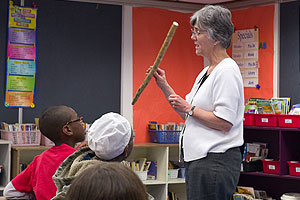
If you can’t visit us, the Connecticut Museum can come to you! Outreach programs use reproduction objects and documents from our collection along with hands-on activities to bring history to life in your classroom.These participatory programs are designed for class-size groups. They are not suitable for assemblies or large groups, unless otherwise noted. Most programs for grades 3 and older require student reading.
Program Length: 1 ¼ hours (allow 15 minutes between programs).
Programs designed for grades 6-12 can be shortened to 60 minutes to accommodate class periods.
Cost: $150 per program plus round trip mileage from the Connecticut Museum at 67¢ per mile.
Discounts available for Priority School Districts and Title I Schools.
Thank you to the Charles D. Fleischman Charitable Trust, the Scripps Family Fund for Education and the Arts, the Society of the Cincinnati in the State of Connecticut, and the U.S. Department of Education.
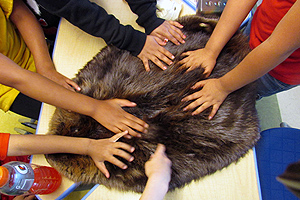
 What are my different communities and what is my role in them? This interactive program explores the roles and responsibilities in family, school, and town communities. Students will try out different jobs done in these communities today and long ago with contemporary and reproduction historical objects. Students will also determine what a community needs by designing their own town on a floor map.
 T
T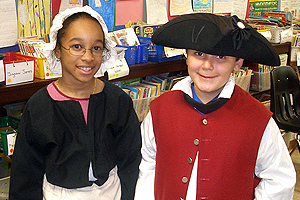 Using reproduction objects and hands-on activities, students are introduced to daily life in colonial Connecticut. They compare and contrast their own lives to those of colonial children as they learn about both work and play. Students make a reproduction “hornbook,” examine differences in clothing and daily chores, and enjoy colonial-era toys.
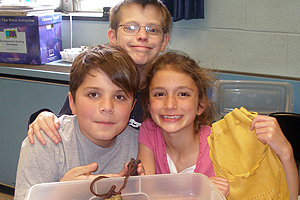 In this program, students become
 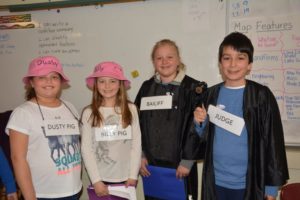 Students explore Connecticut’s executive, legislative, and judicial branches of government to discover who makes the rules in Connecticut. To better understand the role of each branch, students elect a governor from among their classmates, debate a bill, and hold a mock trial (student reading required). Through role-playing and active participation, students learn the purpose of rules and laws, explore the separation of powers, and discover the rights and responsibilities of individuals.
 Who lived in colonial Connecticut? In this program, students will learn about a diverse set of "characters" from colonial Connecticut (inspired by real people) such as a colonial tinsmith, enslaved woman, Patriot soldier, or Nipmuck trader. Students will work in small groups to explore one identity box, using reproduction artifacts, primary sources, and hands-on activities to understand their character's role and perspective in a colonial community.
 This program introduces students to a variety of 20th-century stories about moving to Connecticut. An introductory game of chance looks at the difficult choices and conditions faced by immigrants throughout history. Students then work in teams to examine artifacts from curated immigration trunks and uncover different family stories about moving to Connecticut from Georgia, Poland, Jamaica, and Vietnam.
 In this interactive program, students will explore the Revolution through the perspectives of everyday people in Connecticut. Two versions of this program allow teachers to choose the focus that best fits their curriculum and schedule. Please note that both options include close-looking at primary sources, hands-on activities with reproduction objects, and writing with quill pens and ink.
 Explore the Connecticut event that had a national impact on the rising tensions leading up to the Civil War. Investigate the dramatic 1839 story of 53 Africans, who were kidnapped from their homeland, enslaved, and